
March is National Nutrition Month®, a perfect time to focus on simple steps that support healthier eating and stronger communities. One of the easiest ways to improve overall wellness is by adding more fresh fruits and vegetables to your daily routine. Whether you’re cooking for yourself, your family, or your neighbors, nutritious choices can be both affordable and delicious.
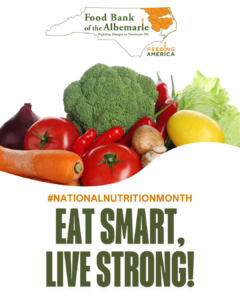
“For many people, healthy eating can be a real struggle,” says Food Bank Nutrition Educator Melissa Martin. “Eating what is good for you is not about perfection; it is about making progress to your overall health and wellbeing. Making small changes in your daily food choices can really add up. Fill up on the healthy foods that will give you energy, clarity and nourishment. These can be the steps toward building a better and healthier you.”
Food Bank of the Albemarle and our hunger-relief partners are helping make those choices easier by providing access to fresh, high‑quality produce, whole grains, and proteins throughout the year. When families have reliable access to wholesome foods, they’re better equipped to enjoy balanced meals, maintain energy, and support long‑term wellness.
“Heathy eating is or should be a life choice,” says Ann Thomas, Nutrition Educator at Food Bank of the Albemarle. “Teaching nutrition and healthy eating is important because it opens the door to new ideas, new foods, such as healthier ways of preparation which improves overall health such as lowering blood pressure, controlling diabetes, and cholesterol. Demonstrating and teaching how to prepare everyday food in a healthier way impacts overall health, which is why we do what we do. Many (of our neighbors) have spoken of how the nutrition class has helped changed how they prepare food and make healthier choices.”
Fresh Produce to Inspire Healthy Meals
The Food Bank’s Neighborhood Hub Food Pantry is open 5 days a week and distributes a colorful variety of produce and healthy choices such as:
- Potatoes – Great for roasting, soups, and hearty sides
- Cabbage – Perfect for stir‑fries, slaws, and warm skillet meals
- Green Beans – Easy to sauté, steam, or add to casseroles
- Squash – Versatile for baking, sautéing, or blending into soups
- Apples – Ideal for snacking, salads, or homemade applesauce
- Sweet Potatoes – A nutrient‑rich staple for baking, mashing, or roasting
- …and more seasonal favorites!
You can find delicious and healthy recipes featuring these and other fruits and vegetables on our Teaching Kitchen page.
Simple Ways to Boost Your Plate
Healthy eating doesn’t have to be overwhelming. Here are three small changes that make a big difference:
1. Fill Half Your Plate with Fruits & Vegetables
Colorful produce provides essential vitamins, minerals, and fiber. The Food Bank’s Neighborhood Hub Food Pantry has a wide variety of seasonal produce throughout the year to choose from.
2. Choose Whole Foods More Often
Fresh ingredients like squash, green beans, apples, and sweet potatoes help reduce added sodium, sugar, and preservatives.
3. Plan Meals Around What’s Available
Let the ingredients guide your menu—roasted cabbage wedges, sweet potato chili, apple‑green bean salad, and more. While the availability of certain food at your local food pantry may vary, there is always a good variety of new things to try.
Supporting the Community Together
Healthy eating is most successful when nutritious foods are accessible to everyone. Food Bank of the Albemarle works year‑round to ensure our neighbors across 15 counties in Northeastern North Carolina have the fresh ingredients they need to build balanced meals.
Click the links below to learn more about the different ways The Food Bank is working in your community, and ways that you can help provide support and keep the pipeline of food going.


